Every night, millions of people rely on street lights to keep their neighborhoods bright, safe, and welcoming. Well-lit streets help prevent accidents, discourage crime, and make outdoor spaces more usable after dark. But what happens when a street light stops working? A broken or flickering street light may seem like a small issue, but it can have real consequences for road safety, community comfort, and even local business. Many people are unsure who to call, what details to report, or why their report matters.
If you’ve ever walked or driven down a dark road, you know the difference a single working street light can make. Knowing how to report a street light not working is an important skill for every resident. This guide will walk you through why reporting matters, how the process works, and what you should expect after making a report. You’ll also learn tips for getting results faster and avoiding common mistakes.
Why Street Lights Matter
Street lights are more than just sources of light—they are essential parts of modern cities and towns. Here’s why they’re so important:
- Safety on Roads: Good lighting helps drivers see pedestrians, bicycles, and road hazards. According to the Federal Highway Administration, well-lit streets can reduce nighttime crashes by up to 35%.
- Crime Prevention: Studies show that better lighting can lower the risk of crimes like theft and vandalism. Criminals are less likely to target well-lit areas.
- Community Comfort: People feel safer walking, jogging, or cycling at night when streets are illuminated. Parks and shops stay open longer, encouraging community life.
- Navigation: Street lights help people find their way, especially in unfamiliar areas or during bad weather.
- Business Activity: Well-lit business districts attract more customers in the evenings, supporting local shops and restaurants.
Missing or broken lights quickly change the feeling of a neighborhood. A single unlit street can become a trouble spot, especially in areas with lots of foot traffic.
Common Problems With Street Lights
Street lights can stop working for many reasons, and not all faults are obvious. Here are some of the most common problems:
- Completely out: The light does not turn on at all.
- Flickering: The light turns on and off repeatedly, which can be distracting or even dangerous.
- Dim light: The bulb is on but much weaker than usual.
- On during the day: The light stays on even in sunlight, wasting energy.
- Physical damage: Broken poles, smashed fixtures, or exposed wires.
Knowing what kind of problem you’re seeing helps you report it accurately, leading to faster repairs.
Credit: www.alabamapower.com
Who Is Responsible For Street Lights?
Responsibility for fixing street lights varies by location. Here are the most common cases:
- City or municipal government: In most urban areas, the city public works or transportation department maintains street lights.
- Utility companies: In some regions, the local power company owns and repairs street lights.
- Homeowners’ associations (HOA): In private neighborhoods, the HOA may handle repairs.
- State departments: On highways and major roads, the state government is usually responsible.
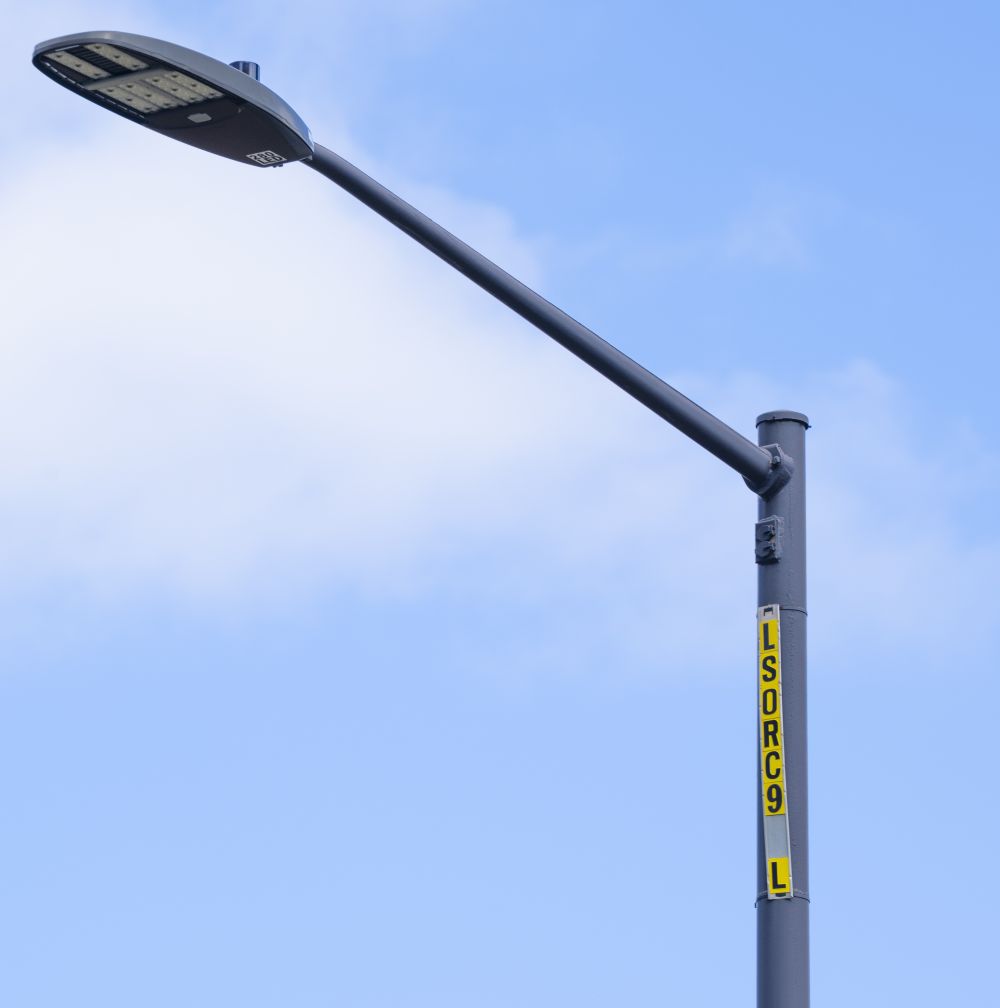
You can often find a small plate or sticker on the pole with a number, company name, or city logo. This helps identify who owns the light.
How To Identify A Street Light Problem
Before you report, it’s helpful to check a few details. This ensures your report is clear and complete.
- Location: Write down the exact address or nearest intersection. If there’s a pole number, include it.
- Type of problem: Is the light out, flickering, dim, or damaged?
- Time noticed: Note when you first saw the problem and if it’s constant or happens at certain times.
- Hazards: Are there extra safety risks? For example, is the dark area near a crosswalk or school?
- Photos: If possible, take a clear photo of the pole and the problem. Some reporting systems allow you to upload images.
These details help repair crews find and fix the problem faster.
How To Report A Street Light Not Working
Reporting a broken street light is often quick and easy. Here’s how the process usually works:
1. Find Out Who To Contact
- Check your city’s website: Most cities have a “report a problem” section.
- Look for utility company contacts: Some areas use power company websites or hotlines.
- Ask your HOA or building manager: In private neighborhoods or apartment complexes.
If you’re unsure, call your city’s information hotline or search for “report street light [your city]”.
2. Choose Your Reporting Method
Most cities and utilities offer several ways to report:
- Online forms: The fastest and most common option.
- Mobile apps: Some cities have apps for reporting street issues.
- Phone hotlines: Call a dedicated number and speak to a representative.
- Email: Less common, but possible in some places.
- In-person: Visit your local city hall or public works office.
3. Submit The Required Information
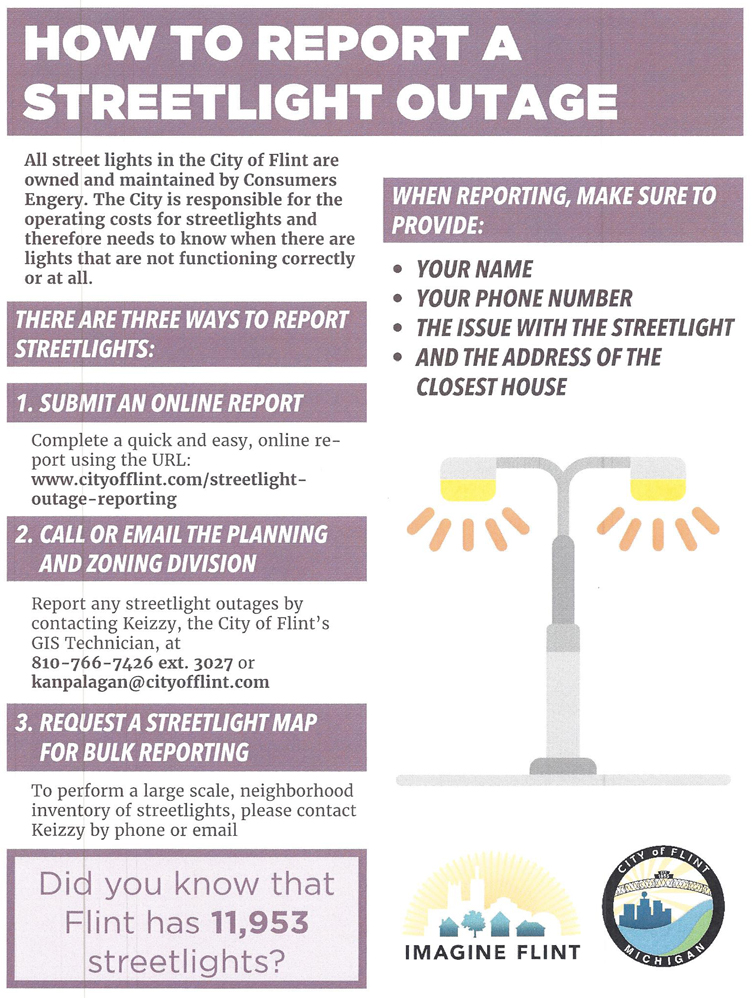
Be ready to provide:
- Exact location (address, intersection, or pole number)
- Type of issue (out, flickering, damaged, etc.)
- Your contact information (sometimes optional)
- Photos (if allowed)
Many systems let you track your report and receive updates.
4. Follow Up If Needed
If the light is still not working after a few weeks, contact the city or company again. Refer to your report number for faster service.
Example: Reporting In A Major City
Let’s say you live in Los Angeles. Here’s how you’d report:
- Go to the Los Angeles Bureau of Street Lighting website.
- Enter the street address or pole number.
- Choose the problem type.
- Add your contact info and submit.
Most large cities have similar steps.
How Long Do Repairs Take?
Repair times depend on:
- Severity: Dangerous situations (exposed wires, traffic risks) are fixed first.
- Location: Busy roads get faster service than side streets.
- Parts needed: Some repairs need special bulbs or equipment.
- Weather: Storms or icy conditions can cause delays.
Here’s a comparison of typical repair times in different locations:
| Location Type | Average Repair Time | Notes |
|---|---|---|
| Downtown/Main Roads | 1–5 days | High priority for safety |
| Residential Areas | 5–15 days | Lower priority, but still tracked |
| Highways/Bridges | 2–7 days | May require traffic control |
| Parks/Public Spaces | 7–30 days | Depends on funding |
If a repair is delayed, it’s usually due to weather, a backlog, or supply issues.
Credit: www.aldermanervin.com
What Happens After You Report
Once you submit a report, the following steps typically occur:
- Acknowledgment: You receive a confirmation (email, app, or phone).
- Inspection: A crew checks the light, usually within a few days.
- Repair: The crew fixes the problem or orders parts if needed.
- Update: You may get a notification when it’s fixed.
Some cities allow you to track the status online.
How To Speed Up Your Report
While you can’t control repair crews, you can improve your chances of a quick fix:
- Be specific: Give exact location and problem details.
- Include pole numbers: These help crews find the right light.
- Highlight safety risks: Mention if the light is near schools, bus stops, or accident-prone areas.
- Submit photos: Visual proof helps teams understand the issue.
- Follow up politely: Wait a reasonable time, then check back if needed.
Common Mistakes When Reporting
Many reports are delayed or ignored due to avoidable mistakes. Here’s how to avoid them:
- Unclear locations: “Near the park” is too vague. Use addresses or pole numbers.
- Wrong contact: Reporting to the wrong department slows things down.
- Missing problem details: “Light not working” is less helpful than “flickering every night.”
- Duplicate reports: Too many reports for the same light can cause confusion.
- No follow-up: If you never check back, the issue might be forgotten.
Why Reports Sometimes Go Unfixed
Not every street light problem gets fixed quickly. Here are some reasons why:
- Budget limits: Some cities have limited money for repairs.
- Vandalism or repeated damage: Lights that are often broken may take longer to fix.
- Ownership confusion: Sometimes it’s unclear if the city or a utility is responsible.
- Supply chain issues: Special parts or bulbs may be on backorder.
- Missed reports: Sometimes, reports get lost or misfiled.
If you notice a light still broken after a month, it’s a good idea to report it again.
Credit: flintneighborhoodsunited.org
The Impact Of Unfixed Street Lights
A single broken street light can have a bigger effect than most people think. Here are some real-world impacts:
Increased Crime
Research by the University of Chicago Crime Lab found that improved street lighting reduced crime by up to 36% in some neighborhoods. Unlit streets are more likely to attract criminal activity.
Higher Accident Risk
Drivers and cyclists rely on street lighting to avoid obstacles and see pedestrians. The Insurance Institute for Highway Safety reports that nearly 50% of fatal pedestrian accidents in the US occur at night, often in poorly lit areas.
Lower Property Values
Dark streets can make neighborhoods feel less safe, which can affect property prices and community reputation.
Reduced Community Use
Parks, sidewalks, and public spaces become less inviting after dark if lighting is poor, reducing healthy outdoor activity.
What To Do If A Broken Light Causes An Accident Or Crime
If an accident or crime occurs due to a broken street light, take these steps:
- Call emergency services: Report the incident to police or medical responders.
- Document everything: Take photos of the scene and the broken light.
- File a formal complaint: Notify your city or utility, referencing the incident.
- Contact your insurance: If property damage or injury occurred.
- Ask about claims: Some cities have processes for compensation if they failed to fix a reported hazard.
Most cities will investigate serious incidents and may prioritize repairs in affected areas.
How Modern Technology Is Improving Street Light Reporting
City technology is advancing quickly, making it easier to report and fix street light problems:
- Smart sensors: Some modern street lights can report their own failures to city control centers.
- Interactive maps: Many cities now show reported outages on public maps, so you can see if a problem is already known.
- Mobile apps: Apps like SeeClickFix, 311, or city-specific tools make reporting faster and often provide updates.
- Automated notifications: Some systems send text or email updates when your report is being handled.
These tools can speed up the repair process and improve transparency.
How Cities Prioritize Repairs
Not all broken lights are treated equally. Here’s how cities usually decide what to fix first:
| Priority Level | Type of Issue | Typical Response Time |
|---|---|---|
| Emergency | Exposed wires, pole down, traffic hazard | Same day – 2 days |
| High | Outages near schools, hospitals, major roads | 1–5 days |
| Normal | Single light out in residential area | 5–15 days |
| Low | Lights on during day, minor issues | 15–30 days |
Knowing this can help you set realistic expectations and understand why some repairs take longer.
Comparing Reporting Methods
Different cities offer different ways to report. Here’s a look at the pros and cons of each:
| Method | Pros | Cons |
|---|---|---|
| Online form | Quick, available 24/7, easy to track | Requires internet, sometimes confusing forms |
| Mobile app | Upload photos, get updates, map-based | App must be downloaded, not always available |
| Phone hotline | Good for urgent issues, works without internet | Can have long wait times, less tracking |
| Easy for some users, can send details/photos | Slower response, not always monitored | |
| In person | Direct contact, can show documents/photos | Time-consuming, limited hours |
Choose the method that works best for your needs and comfort level.
What Details Help Most In A Report?
To get the fastest results, include these key details when reporting:
- Exact location: Address, intersection, or GPS if possible.
- Pole number: Usually found on a sticker or plate.
- Type of issue: Out, flickering, dim, broken, or always on.
- Time noticed: When you first saw the problem.
- Photos: Show the pole, the issue, and the surrounding area.
- Nearby hazards: Schools, bus stops, busy intersections.
The more details you give, the easier it is for crews to find and fix the problem.
Examples Of Effective Reports
Here are two sample reports—one effective, one not:
Ineffective Report:
“street Light Is Broken Near The Park. Please Fix Soon.”
Effective Report:
“The street light on Main St, between 3rd and 4th Ave, in front of 123 Main St (pole #408), is completely out. First noticed on March 5th. The area is dark and near a school bus stop. Attached is a photo of the pole and location.
”
The second report gives all the details needed for a fast response.
How To Check If Your City Has Already Logged The Problem
Some cities have public maps or online databases showing street light outages. Search for “street light outage map [your city]” to check before you report. If the problem is already listed, you may not need to submit a new report.
What If Multiple Lights Are Out?
If several lights on the same street are not working, it may be a larger electrical issue. In this case:
- Report all affected lights: List each pole number and the range of the outage.
- Mention the pattern: “Five lights in a row out” signals a bigger problem to repair crews.
- Expect longer repair times: Large outages sometimes require more planning or equipment.
What About Privately Owned Street Lights?
Not all street lights are public. Some are owned by shopping centers, apartment complexes, or HOAs. If you see a broken light in these areas:
- Contact the property manager or security office first.
- Check for posted phone numbers on or near the light.
- Ask neighbors if they know who to contact.
If you’re unsure, your city’s public works department may be able to tell you who is responsible.
Environmental Impact Of Broken Street Lights
While most people focus on safety, broken or always-on street lights also affect the environment:
- Wasted energy: Lights left on during the day waste electricity.
- Light pollution: Poorly aimed or flickering lights can increase skyglow and harm wildlife.
- Maintenance waste: Delayed repairs can lead to higher costs and more resources used.
Reporting problems helps cities maintain energy efficiency and reduce environmental harm.
Why Your Report Matters
Many people assume someone else will report a problem, but cities depend on residents to notice and share issues. If you don’t report, the problem may last much longer. Your report:
- Protects your community: Lighting keeps everyone safer.
- Supports city services: Helps cities use resources wisely.
- Improves data: Cities use reports to plan upgrades and maintenance.
- Shows civic involvement: Active residents help build better neighborhoods.
Non-obvious Tips For Reporting
Here are two insights most beginners miss:
- Check for patterns: If you notice several lights in your area failing at once, mention this in your report. It can help identify systemic electrical problems, which are often fixed faster when described as a group issue.
- Repeat reporting helps: If a light is repaired and fails again soon after, keep reporting it. Recurring failures can point to deeper infrastructure issues that need special attention.
How To Get Involved In Long-term Solutions
If you want to do more than just report, consider:
- Joining a neighborhood watch: Many groups work with cities to track lighting issues.
- Attending city council meetings: Raise concerns about lighting budgets or upgrades.
- Volunteering for community clean-ups: Sometimes, overgrown trees or vandalism block street lights.
Citizens can play a role in shaping safer, better-lit neighborhoods.
Additional Resources
For more information on the importance of public lighting and safety, see the U.S. Department of Energy’s LED Lighting Guide.
Frequently Asked Questions
How Do I Find The Pole Number On A Street Light?
Look for a metal plate or sticker on the pole, often at eye level or higher. The number helps crews identify the exact light needing repair. If you can’t find it, use the closest address or landmark in your report.
Who Pays For Street Light Repairs?
City governments, utility companies, or private owners (like HOAs or shopping centers) usually pay for repairs. The cost is often covered by local taxes or utility fees, not individual residents.
What If The Street Light Is In A Dangerous Location?
Mention any safety risks in your report. Cities usually prioritize repairs near schools, hospitals, crosswalks, or accident-prone intersections. If there’s immediate danger (exposed wires, pole down), call emergency services.
Can I Track The Progress Of My Report?
Many cities offer online tracking tools or mobile app updates. You’ll need your report number or confirmation code. If tracking isn’t available, you can call or email for updates.
What Should I Do If Repairs Take Too Long?
Follow up with the city or utility using your original report number. If the issue is urgent or has caused accidents, escalate to a supervisor or file a formal complaint. Persistence often helps get results.
A well-lit street benefits everyone. By reporting problems quickly and accurately, you help keep your community safe, attractive, and welcoming for all.